The power of collaboration

In this guide, Bridgespan explores the opportunities for philanthropic collaborations to support global health and development amid recent shifts in the funding landscape

Home Image

Overview

Philanthropic collaboratives occupy a key position in this moment of great disruption. By pooling resources across funders, they can mobilise more capital and shared expertise than any single donor or foundation can do alone. 

Over a period of six months, Bridgespan set out to understand the role philanthropic collaboration can play amid the volatility dominating the global health and development fields. 

Through 27 interviews with collaborative leaders and donors of collaboratives, a review of nearly 50 articles and reports, and a survey of 52 leaders of collaboratives, Bridgespan explored how collaboratives and their donors are navigating this new landscape. 

The team specifically examined how collaboratives —most of which, according to survey data, are not directly reliant on ODA—can respond to today’s urgency and global disruption with coordinated, sustained, and flexible support for local leaders and communities. 

The findings from the survey are outlined in this guide, abridged and reproduced with permission from Bridgespan. Read the full guide here

A shifting paradigm

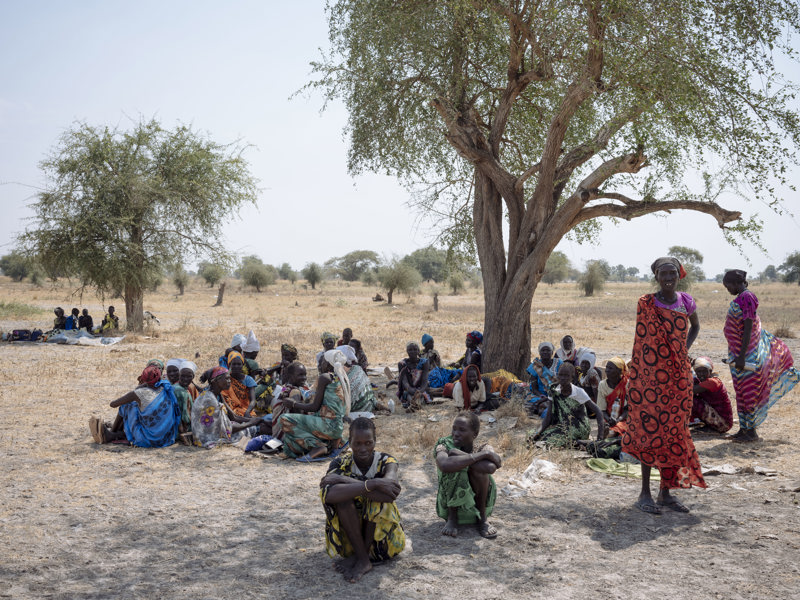
The recent shifts in international aid have been seismic. Across the world, communities are facing a new kind of upheaval—not a pandemic or a natural disaster but the sudden withdrawal of global aid.

In 2024, official development assistance (ODA) declined for the first time in six years, by 7.1 percent in real terms compared to 2023. Major donor countries, including the United Kingdom, Germany, France, and the United States, each cut aid spending. 

Then, in early 2025, the US administration moved swiftly to dismantle the US Agency for International Development (USAID), deepening the shock waves across the field, shaking one of the major contributors to global health and development financing. Clinics have closed, teachers and community health workers have lost support, and programmes that once saved millions of lives— immunisation, nutrition, clean water, HIV treatment, and rural education among them—have scaled back or disappeared altogether.  

“It’s not just discomfort,” says Françoise Moudouthe, chief executive officer of the African Women’s Development Fund, a pan-African feminist fund that supports women’s rights organizations across Africa, “This has deadly consequences.”

Countries within sub-Saharan Africa— historically the largest regional recipient of ODA—have been particularly affected, with some estimates projecting declines up to 28 percent in 2025. 

Leaders in the Global South have described the suddenness and severity of funding cuts as cruel and inhumane. As of November 5, 2025, it was estimated that USAID’s dismantling has already caused the deaths of six hundred thousand people, two-thirds of them children. 

Researchers project that an additional 14 million lives will be lost by 2030 if USAID defunding continues at its current pace. In the face of this crisis, leaders remain deeply committed to the communities they serve—with many even asking whether this moment could create an inflection point, a chance to rebuild systems to be more just, resilient, locally rooted, sustainable, and self-reliant

ODA has played a critical role in global health and development gains of recent decades, helping turn the tide on HIV, supporting mass vaccinations in low-income countries, and helping drive historic declines in child mortality. At the same time, criticism of the global aid status quo has been growing: its power is too centered in the Global North; it creates a cycle of dependence; it’s not built to scale up big ideas; and it’s a product of the inequities of colonialism. 

“What if funding enabled locally led organisations to work without restriction, delivering fully locally led solutions?” asks Nadia Kist, executive director of Blood:Water, which funds and strengthens African-led community organisations on the frontlines of ending health disparities. 

“What if we were able to build a more long-lasting approach that invests in sustainable community resilience? There would no longer be an indefinite need for bilateral assistance. If the moment the tap is closed and everything crumbles, that should raise a red flag. We need to rebuild the system with this in mind.”

To be sure, there is no single solution to address the challenges of this moment, which are too big for any one actor or pathway. And while the gaps left by ODA withdrawals are too large for philanthropy to bridge alone, there remains a critical role for philanthropy to play, especially in partnership with others.

What are collaborative funds?

Collaborative funds are organisations that channel resources from multiple donors to nonprofit organisations, nongovernmental organisations, and other social change initiatives—often focusing on specific social issues or areas of interest. 

In the United States, philanthropists have increasingly turned to collaborative giving vehicles to join forces with other funders by pooling resources to achieve more than any single funder could on their own. 

In our experience in Africa and Asia, collaboratives most often have a multistakeholder focus, engaging philanthropy alongside governments, multilateral organisations, and the private sector. 

Funders often benefit from the issue area and geographic expertise of funder collaboratives, their relationships with proximate leaders, and their established giving infrastructure.

While philanthropic collaboratives work in different ways, they tend to fall into the three broad types outlined below. 

  1. Community driven funds mobilise resources and regrant funds from a wide range of donors that have a shared goal, often working in concert with local stakeholders and communities. 
  2. Strategy-aligned funder collaboratives focus on a specific social issue, typically launched by one or more institutional foundations or other donors, and engage funders across sectors (such as philanthropy, governments, and multilaterals). 
  3. Giving platforms enable donors—particularly high-net-worth individuals—to pool or align investments in promising organisations and ideas that the collaborative has identified.

Of the individuals we surveyed, 51 percent identified their organisations as community-driven funds, 29 percent as strategy-aligned, and 4 percent as giving platforms. Sixteen percent saw their organisations aligned across a combination of the collaborative archetypes. 

Urgent needs meet funder hesitancy

The world has already seen that philanthropy, including institutional foundations, individual donors, and funder collaboratives, can rally in times of global volatility.

In the early stages of the COVID-19 pandemic, funders acted rapidly and decisively, playing a pivotal role in everything—from international, multi-stakeholder collaborations that incentivised vaccine development and equitable global access to numerous collaborative funds that quickly moved resources to local communities.

Yet, while the philanthropic response to COVID-19 was swift and resounding, our interviews and research indicate that, with some exceptions, philanthropy in 2025 has been slower to respond to the foreign aid cuts in a meaningful way. 

“There is a lot of talk about the urgency and responsibility of funders, but are funders ready to do more than respond to emergency needs?” asks Megan Hastings, head of partnerships at Adeso, an African social enterprise working to shift power and resources to local leaders in Africa and globally. “This moment is a unique opportunity to embrace risk and make space for radical transformation in funding practices.”

What makes this moment different from the philanthropic response to COVID-19? Many funders describe a growing recognition that this “moment” is not a single moment but rather a permanent shift in global health and development. 

“With COVID, it felt like a tsunami, but it felt like it was going to be finite,” says Kara Weiss, executive director of the CRI Foundation, a private philanthropy that funds evidence-based health interventions and development research across Africa.

This structural shift has left some funders experiencing what interviewees describe as “a sense of paralysis” as they grapple with how to adapt long-held strategies and notions of how to reach sustainable scale. Whether or not greater stability will return has compounded funders’ worry.

“Philanthropy is waiting for the other shoe to drop,” says Solomon Zewdu, CEO of The END Fund, a collaborative fund dedicated to ending six neglected tropical diseases (NTDs). “Everyone is guarded.” 

At the same time, the rise of global authoritarianism, the weakening of civil society, and the backlash against diversity, equity, and inclusion in the United States have also left some funders more hesitant for fear of becoming a target or opening themselves up to political risk.

“The US government executive orders had a real chilling effect,” says Weiss. “Folks were scared, and you didn’t want to react because anything could happen.”

The opportunity for philanthropy 

Despite hesitation among funders, some optimism persists. Leaders we spoke with emphasise that a vital role for philanthropy lies in its catalytic and time-limited nature.

While its resources are far smaller than global aid or government budgets, philanthropy can spark innovation, partnership, and long-term change. 

Further, at their best, technological breakthroughs in public health and the rise of artificial intelligence can bring dramatic advances to help accelerate the momentum of sustainable change.

Against this backdrop, many leaders view this moment as an opportunity to embed practices for effective giving that many have long championed: investing in local leaders, leveraging technological innovation to drive down costs, strengthening capacity and infrastructure, and fostering broad collaboration. 

Most prominently, and consistent with what we’ve long heard, leaders point to the need to shift decision making and flexible resources to proximate leaders— including local civil society leaders as well as national and local governments. 

Longterm resilience emerges when communities, countries, and regions aren’t reliant on foreign aid but rather when local assets and innovations build and maintain the social safety net.

“Now is the time not to radically change strategies but to lean into core principles of local ownership, leadership, and proximity, ” says Yasmin Madan, director and US lead of philanthropic collaboration at Co-Impact, which brings together local change-makers and funders from around the world to make health, education, and economic systems stronger and more inclusive, creating impact that lasts.

Across Africa, this opportunity is already taking shape. Locally-led organisations across the continent are demonstrating that working closely with communities and governments to co-design solutions creates lasting progress. 

Katie Bunten Wamaru, co-CEO of African Collaborative, which invests exclusively in African-led organisations with multi-year capital, describes this as “a different version of scale.” Local leadership and collaboration, she says, create systemic, sustainable impact from the ground up. 

Well-resourced local leadership and strong, accountable governments, when at their best, are mutually reinforcing. Many interviewees emphasise that this moment requires national governments to commit greater resources to development priorities.

They urge philanthropy to back local and national development agendas by helping strengthen diverse talent pipelines and public infrastructure, both digital and physical. 

This could mean catalysing local supply chains, strengthening data and research institutions, and funding local civil-society organizations.

For instance, Madan of Co-Impact emphasises that it is important for philanthropy not to replace aid and funding for essential commodities, such as contraceptives, but rather help ensure their sustainability through domestic resources, including line items in national health budgets.

It is a sentiment that resonates with other sector leaders. “Philanthropy should play more of an enabler and facilitator role,” says Ruth Mapara, director of Masana wa Afrika, which provides grants to community-based organisations serving children across Africa. “How can philanthropy help facilitate the integration of services historically provided by civil society with government?” 

Alice Kang’ethe, CEO of the Beginnings Fund—a philanthropic collaborative aiming to prevent over three hundred thousand avoidable deaths of women and newborns by 2030 by advancing lower-cost, high-impact, evidence-based interventions—underscores the critical importance of government partnerships. 

“We co-create investment plans, with sustainability built in from the outset, with government leadership and government ownership,” Kang’ethe says. 

Other leaders note that such accessible and adaptable innovations can permanently lower countries’ cost burdens. Realising this vision will also require mobilising alternative sources of financing, such as sustainable investment by the private sector. 

For philanthropy, this could mean pursuing opportunities for blended finance, expanding the market of development impact bonds, or implementing advance market commitments. 

Leaders also point to opportunities for debt relief, the burden of which frustrates many nations’ efforts to fund even lower-cost health interventions sustainably. They also underscore that no single investment will unlock this alternative financing shift. It will require coordinated and ecosystem-wide efforts. 

Critical for that ecosystem will be collaboration in its broadest sense, with shared problem-solving and cross-sector partnership across donors, governments, nonprofits, and the private sector. 

“With the rapidly changing development landscape, the premium will be on building new partnerships, developing new sources and means of finance, and exploring how technology can be deployed to assist and scale delivery, ” says Alice Albright, founder of Acadia Advisory and former CEO of the Millennium Challenge Corporation, a US foreign aid agency that experienced deep funding cuts earlier this year.

A critical bridge

Philanthropic collaboratives occupy a key position in this moment of great disruption. By pooling resources across funders, they can mobilize more capital and shared expertise than any single donor or foundation can do alone. 

Further, collaboratives’ deep connections to organizations and leaders on the ground and ability to build bridges across actors and sectors position them well to respond when traditional aid systems falter. 

To better understand how collaboratives are navigating the volatility of this moment, we surveyed 52 collaborative leaders working in global health and development. 

Of those respondents, 74 percent reported substantial work in Africa, 66 percent in Asia, and 50 percent in Latin America. Collaboratives typically find themselves in a distinctive “middle-ground” position in the social change landscape. 

Like philanthropic donors, they operate as grantors to a wide range of organizations and must navigate the many competing demands from grantees. 

Meanwhile, as (typically) un-endowed funding intermediaries, they are dependent on increasingly constrained philanthropic funding to carry out their work. Our survey affirms this “middle-ground” position. 

Nearly 75 percent of collaboratives that responded to our survey receive less than 10 percent of their funding from ODA. By contrast, one survey found the USAID cuts have directly impacted 67 percent of civil society organisations globally. 

For now, most collaboratives are continuing to deploy similar levels of resourcing—80 percent of survey respondents plan to move the same amount or more money this year compared to last. 

However, collaboratives (like philanthropic foundations) are experiencing surging demand from grantees. Nearly 90 percent of our survey respondents report an increase in requests from potential grantees compared to this time last year. 

Despite this increased demand, collaboratives are also contending with funder paralysis: 59 percent of respondents expect their own 2025 funding to decrease, and 18 percent anticipate it will remain flat. 

These findings highlight both the resilience and the strain within the collaborative model; positioned between major donors and front-line organisations, collaboratives have maintained the flow of resources even amid cuts to aid. 

Their ability to mobilise quickly, share risk, and channel flexible funding directly to local partners makes them a critical bridge between shrinking public aid and urgent community needs. But they are reaching the limits of what they can do without greater investment. 

In Bridgespan’s previous research, a global landscape of collaboratives across issue areas, respondents shared that they could deploy nearly three to five times their current annual resources if additional capital were available.

It serves as a reminder that with sufficient philanthropic support, collaboratives can play an even more pivotal role in sustaining and scaling progress in global health and development.

Scaling solutions 

This theme ran through the interviews, research, and survey results: the global health and development fields are at a turning point, and collaboratives bring a relevant set of assets to this moment. 

“They’re the eyes and ears on the ground and in a position to be more adaptable as the stimuli change around us all,” Liz Diebold, a longtime funder of collaborative vehicles, tells us. “Those are the types of actors that will feel it first and then instruct the rest of the space by demonstrating how they’re making micro adaptations.” 

At a time when scarcity mindsets are dominant, collaboratives build bridges—within communities, across organisations, and across sectors—to keep resources and learning flowing where they are most needed. 

Collaboratives already operating at a significant scale, such as The Global Fund to Fight AIDS, Tuberculosis and Malaria, Co-Impact, The END Fund, among others, as well as more recently launched collaboratives like the Beginnings Fund, can aggregate funding commensurate with systems-level and country-level change. 

Together, their ability to mobilise resources, share risk, and coordinate action positions collaboratives to address challenges far beyond the reach of any single donor. 

Next steps

From our research and interviews, we see three ways collaborative funds and broader philanthropic collaborations are translating these strengths to address the specific needs of the global health and development fields today:

What donors can do right now

"Funders keep telling us they’re waiting to see how the dust settles,” says Bunten Wamaru of African Collaborative. “We tell them: ‘You have the resources to help the dust settle better. Now would be the time to do this.’ The most brilliant social impact leaders are already transforming their communities with innovative solutions that prove locally led development works. What they need now is investment.” 

Our interviewees overwhelmingly agree that the current state of global health and development is unquestionably dire and that it is time for a different approach to aid. Our research shows the potential for innovative, collaborative, high-leverage philanthropy. Through private conversations with donors and our research, we consistently hear two themes. 

First, there is a fervent and real desire to meet this moment and to use their flexible capital to help in a time of unprecedented need. 

Second, the awareness of the need to rebuild systems has donors fearful that they will “throw good money after bad,” that their funding may be too small to matter, or that they lack the knowledge to direct funding toward the right leverage points for sustainable change.

There are so many ways to thoughtfully resource leaders who are doing high-impact work today. Every day, we see examples where private capital, of all sizes, makes a dramatic difference. 

For donors looking to fund new geographies or issue areas, or those who feel they lack the time to fully source and research more bespoke giving options, collaboratives can offer ready-made avenues for learning while giving. 

Collaboratives can even identify organizations to fund directly in the future. For donors worried about being “a drop in the bucket,” giving together with other donors to support systems-level change can offer a chance to meet the problem at a scale they couldn’t achieve alone.

Last, while formal collaboratives are particularly well-suited to this moment, so is collaboration in a broader sense. 

Experienced donors with years of working on the ground are coming together in new ways to learn alongside each other, coordinate, and build collective action during a destabilizing time. Philanthropy can never replace aid, but it can reimagine what comes next.

By embracing collaboration, funders can help rebuild systems that are more just, resilient, and locally rooted. When it comes to global health and development, this is not simply a call for generosity—it is an invitation to act together, with intention, to shape a better future.

About this guide

This report was developed with support from the Gates Foundation. The findings and conclusions contained within are those of the authors and do not necessarily reflect the positions or policies of the Gates Foundation. It has been reproduced and abridged here with permission from Bridgespan. The full PDF can be accessed here. Coming soon: an Arabic summary.