A new growth mindset
Most of the world’s extreme poor are farmers, yet with the right support, they can earn their way out of poverty, writes One Acre Fund’s Andrew Youn and Anna Hainze
Sunday, 01 March 2026
Most of the world’s extreme poor are farmers, yet with the right support, they can earn their way out of poverty, writes One Acre Fund’s Andrew Youn and Anna Hainze
Sunday, 01 March 2026
 Andrew Youn is the co-founder and President of One Acre Fund, an organisation that supports more than 5.5 million farmers across sub-Saharan Africa. With more than 20 years of experience in the space, he has lived and worked in Africa’s farming communities, working with the One Acre Fund team to design farmer-centred, evidence-based solutions that improve smallholders’ harvests, incomes and climate resilience.
Anna Hainze is the Chief of Staff to the Managing Director at One Acre Fund, where she supports operations and strategic initiatives that serve smallholder farmers across sub-Saharan Africa. She has led high-impact global and local programs in livelihoods, economic development, and public health, specialising in building collaborative, cross-sector partnerships and operational systems that drive sustainable social change.
Today, more than 800 million people around the world live on less than US$3 dollar a day, which is the most extreme form of poverty globally. For these people, this is not simply about income, is a constant trade-off between food, school fees, health care, and children growing up without enough nutrition to support healthy development.
In these communities, a single drought, failed harvest, or price shock can push families into crisis.
Demographically, most of the world’s extreme poor are African farmers. For that reason, better agriculture is one of the most powerful tools we have for changing life trajectories.
When farmer productivity increases, the effects ripple outwards, improving food security, raising incomes and strengthening economies. Even the modest gains matter.
Just a 10 percent increase in smallholder farmer productivity has the ability to lift nearly 11 million people out of extreme poverty. No other sector offers comparable leverage.
But without access to support, outcomes will not change. For example, when seed quality is poor, or essential farm supplies are too costly or too far away, even fertile land fails to deliver strong harvests.
This understanding led to the founding of One Acre Fund in 2006.. Our model is simple yet effective: work directly with farming communities, understand their challenges, and respond by providing reliable access to the tools, training, and financing they need.
What began in Kenya with 38 farmers now operates in 10 countries in sub-Saharan Africa, serving more than 5.5 million farming families, reaching some 25 million individuals.
"Scaling proven support to more smallholders could help reshape Africa’s future and this really matters as climate change and other factors are making farming less predictable every year."
When access improves, productivity follows. The farmers we serve typically achieve a 30 to 50 percent increase in staple crop harvests, improving food security, income and stability.
Scaling proven support to more smallholders could help reshape Africa’s future and this really matters as climate change and other factors are making farming less predictable every year.
Changing weather patterns, rising costs of farm supplies, and market shocks are shaping a new reality for smallholder famers all over the world and support systems must adapt as fast as these risks emerge.
This evolution requires flexibility, experimentation, and patient capital. This is where philanthropy plays a distinct role, funding adaptation before markets will.
Over the last decade, the One Acre Fund has evolved alongside the communities it supports. Beyond providing farm supplies and training, we now include climate resilience, agricultural technology, and market linkages.
While sales and fees cover 70-80 percent of programme costs and make the model durable, donor funding enables innovation to address pressing challenges, such as climate change. The result? Each dollar invested generates $5 in new profits and assets for the farmers with whom we work.
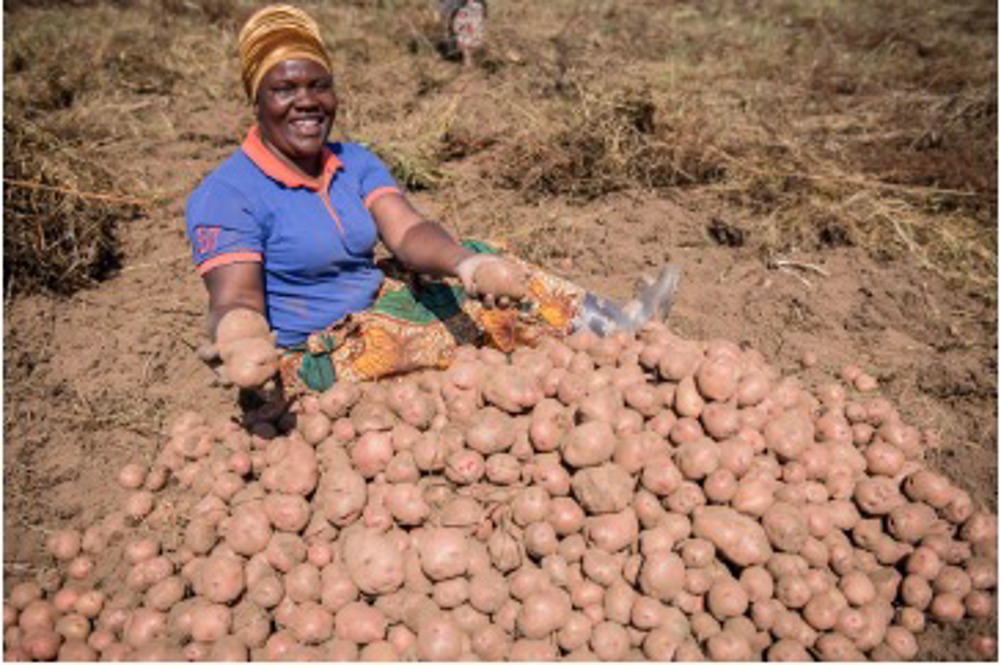
Before joining One Acre Fund, I would receive farming supplies late and this affected my schedule. I now receive my inputs on time, and the payment system is accommodating. My harvest has also increased from 30 to 84 bags of potatoes from an acre of land.” Flaviana Lupenza, Tanzanian Farmer. Photo: One Acre Fund.
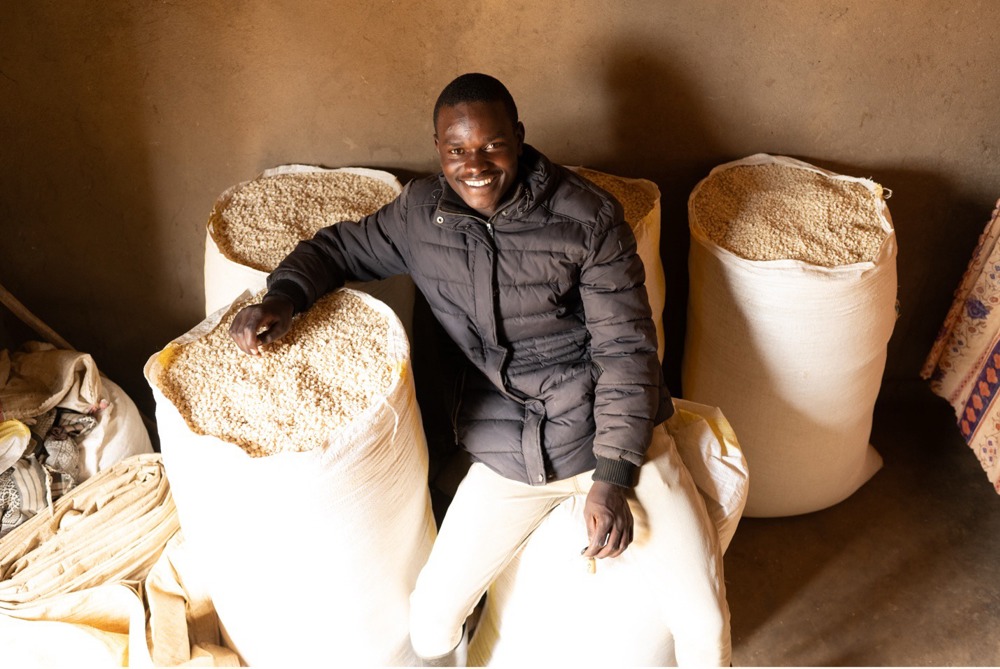
Jean Claude Niyonkuru, 20, is a maize farmer in eastern Rwanda. He has been working with One Acre Fund since 2023.
Smallholder farmers are central to climate resilience. Their livelihoods depend directly on local weather and natural resources, and any serious climate response must include them.
Farmers who can meet their daily needs are better positioned to invest in adaptation, withstand shocks, and plan ahead.
Climate resilience requires tools, knowledge, and income to adapt over time. Tree planting is one example. Trees improve soil structure, reduce erosion, and create long-term assets that grow in value.
At One Acre Fund, we have supported farmers in planting more than 250 million trees across the continent over the last seven years.
However, resilience is not only built through protection, farmers also need tools that allow them to act before crises strike.
Asterie Ntahonvudkiye from Burundi has been farming with One Acre Fund for seven years. The success she’s seen in maximising her own harvests has not only provided food for her family, but also shown her how farming can drive positive change for her entire community.
When smallholders can make better decisions, especially in climates of uncertainty, there are productivity gains across food security, income, and resilience.
This makes farmer-centred agricultural technology one of the most effective ways to drive impact at scale. The UN’s Food and Agricultural Organisation (FAO) shares that agri-tech adoption can increase productivity and transform smallholder outcomes when tools are accessible and relevant.
One example is digital weather advisory services that translate complex forecasts into simple, local guidance. In Burundi, Nigeria, and Rwanda, where we have piloted this service, we help farmers decide when to plant under shifting rainfall patterns.
Smallholder farmers are some of the hardest-working people on earth. Supporting them is about investing in systems that enable farmers to grow their way out of poverty; creating benefits that compound across communities and economies.
This is where strategic philanthropy can play a critical role - funding the innovation and expansion needed to reach even more farmers. This is the moment to act. The returns on poverty reduction, food security, and climate resilience are too significant to delay.
Nigerian farmer Hannatu Thomas explains how greater crop yields helped her invest in a small retail business to support her family.
It's a good idea to use a strong password that you're not using elsewhere.
Remember password? Login here
Our content is free but you need to subscribe to unlock full access to our site.
Already subscribed? Login here