Backing local leaders
Olivia Leland, founder and CEO of Co-Impact, on how philanthropy can help transform global development
Tuesday, 13 January 2026
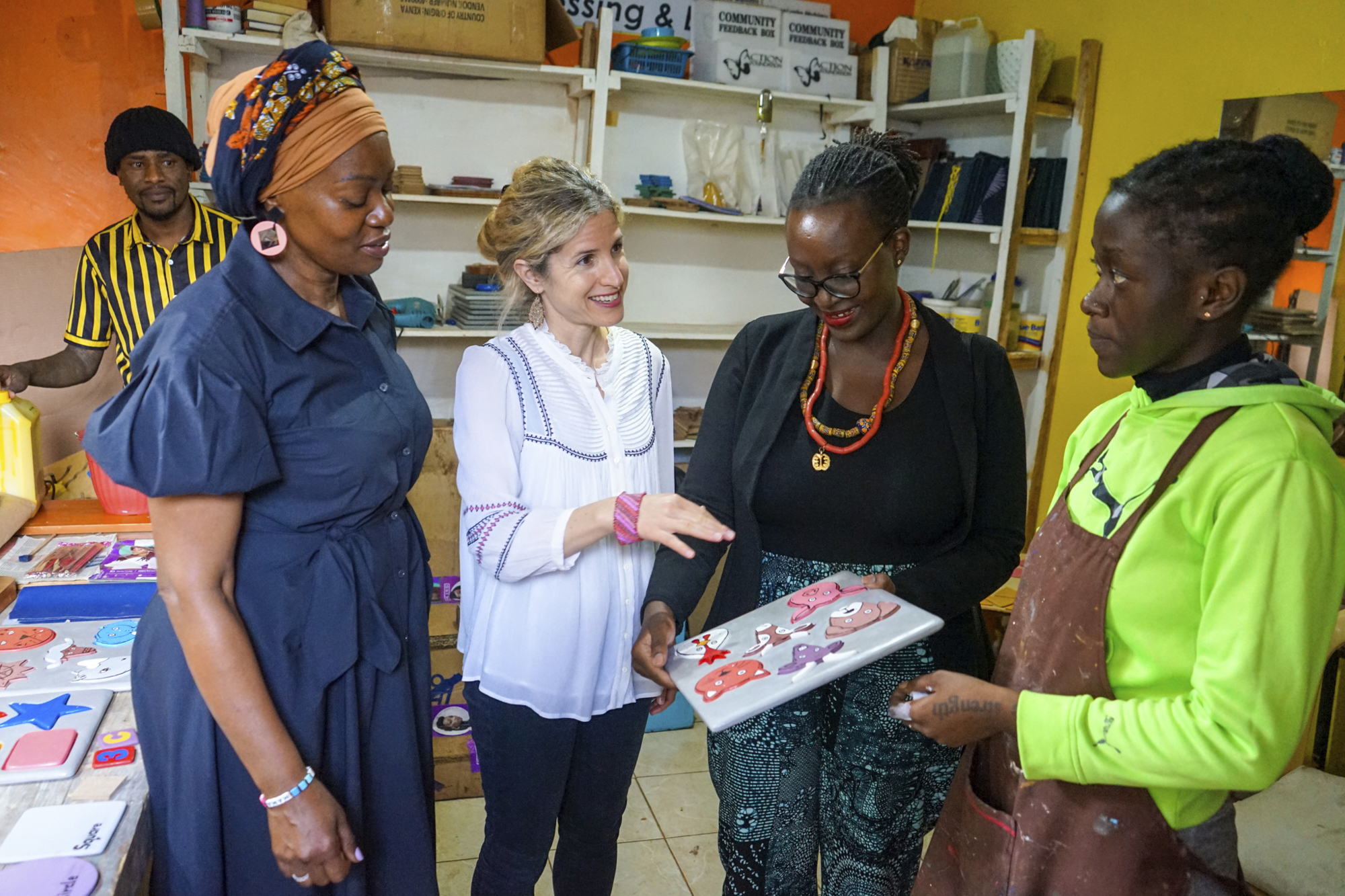
Olivia Leland, founder and CEO of Co-Impact, on how philanthropy can help transform global development
Tuesday, 13 January 2026
 Olivia Leland is the founder and CEO of Co-Impact, a global philanthropic collaborative that brings together local changemakers and funders to make health, education, and economic systems stronger and more inclusive and advance gender equality and women’s leadership. Co-Impact’s team operates across five continents, supporting partners in Africa, Asia, and Latin America. Previously, Olivia served as founding director of the Giving Pledge, an effort launched by Bill Gates, Melinda French Gates, and Warren Buffett to encourage the world’s wealthiest families to commit the majority of their wealth to philanthropy.
From the Middle East and North Africa to sub-Saharan Africa and Asia, communities are grappling with overlapping crises: Economic uncertainty, climate shocks, shrinking civic space, and deepening gender inequality. These challenges are systemic, and yet too often, our responses are not.
For decades, philanthropy and aid have focused on short-term projects - patching holes rather than repairing the foundations.
The result? Cycles of dependency, weakened democracies, and persistent inequities. Despite global commitments, only 0.6% of international funding flows directly to local and national actors. That statistic should stop us in our tracks. It signals a profound disconnect between where resources go and where solutions live.
Recent rollbacks in international aid funding have created a pivotal moment for philanthropy. Traditional models – too often fragmented, top-down, and focussed on short-term projects - are proving inadequate for today’s complex realities.
Philanthropy cannot and should not attempt to fill every gap left by declining foreign assistance. But it can do something far more transformative: pivot from charity to collaboration, from treating symptoms to addressing root causes.
This means centering locally-led solutions and recognising that those closest to the challenges - women and historically excluded groups – are best positioned to drive lasting change.
These leaders understand the nuances of their systems, the cultural dynamics, and the political realities. What they lack is sustained, flexible funding and strategic support.
At Co-Impact, we use pooled funding to enact systems-level change, enabling work at the scale of the challenge through three key principles.
First, pooled funds allow philanthropists to share both resources and risk. Rather than dozens of funders each supporting small, isolated projects with conflicting requirements, collaborative funds can provide the substantial, long-term backing that systems change requires.
When multiple donors pool their resources, they can support initiatives that any one donor alone simply cannot tackle alone.
Second, it’s vital to create communities where donors and local leaders learn and act together. Too often, philanthropy operates in silos, with donors making decisions in boardrooms far removed from the communities they aim to serve.
Real change happens when we break down these barriers, fostering ongoing dialogue between funders and grassroots leaders who understand their local contexts intimately.
Third, and most critically, these partnerships are built on trust, with those closest to the challenges leading the way. Rather than imposing predetermined solutions, philanthropy should provide long-term flexible funding and strategic support that allows local organizations to adapt their strategies based on what they're learning on the ground.
Such small shifts can unlock huge changes in outcomes. But what does this look like in practice?
One example in Nigeria that we have supported is The Gender Mobile Initiative, which has embedded anti-harassment frameworks in over 125 institutions nationwide. Rather than creating parallel structures, the initiative worked within existing educational and workplace systems and conducted dialogues with local leaders who understood which institutions were ready for change. This approach is now driving policy reforms that could protect millions of women and girls.
In Indonesia meanwhile, the organization PEKKA (Women Headed Family Empowerment) has supported over 85,000 women-headed families, advancing their education, economic, legal, and social rights, and has successfully driven policy changes, such as the recognition of women as family heads in civil registration law.
Finally, in India, the organisation ARMMAN is transforming how India's healthcare system serves pregnant women. Co-Impact's support of ARMMAN's program to reduce maternal and neonatal mortality has unlocked over $250 million in funding from India's Ministry for Health to scale the program nationwide, impacting over 70 million women and children.
These examples share a common thread: they centre women and marginalized communities who have been systematically excluded from traditional development approaches.
Their success reminds us – if we needed reminding – that gender equality is a moral imperative.
We must recognise that inequality is not gender neutral. At Co-Impact, we look for partners who understand how gender dynamics shape access and opportunity, and who intentionally design solutions that shift power and agency toward women and girls. That means addressing the structural and social barriers that keep inequities in place, not just responding to the surface-level challenges.
When systems work for women, they work better for everyone; when they don’t, they tend to fail whole communities. That is because women don’t live single issue lives. Their experiences cut across every system, be it health, education, economic structures, or responses to conflict and crisis.
Addressing these interconnected crises will require more than good intentions. It will require philanthropy built on genuine partnerships that respect local knowledge and amplify existing, proven solutions.
The expertise to reshape systems already exists in communities around the world. The question is whether philanthropy will recognize it, and resource it.
Collaboration, trust, and systems thinking deliver results, especially when they centre gender equality and women's leadership. Local leaders, particularly women who have been excluded from traditional systems, already have the solutions. Philanthropy has the resources to scale them.
In a world of intensifying crises - from climate shocks to democratic backsliding to persistent gender gaps - this is the measure by which global philanthropy will be judged. Will it continue to apply band-aids? Or will it seize the opportunity to transform systems by backing those who know them best?
"When systems work for women, they work better for everyone."
"The expertise to reshape systems already exists in communities around the world. The question is whether philanthropy will recognise it - and resource it."
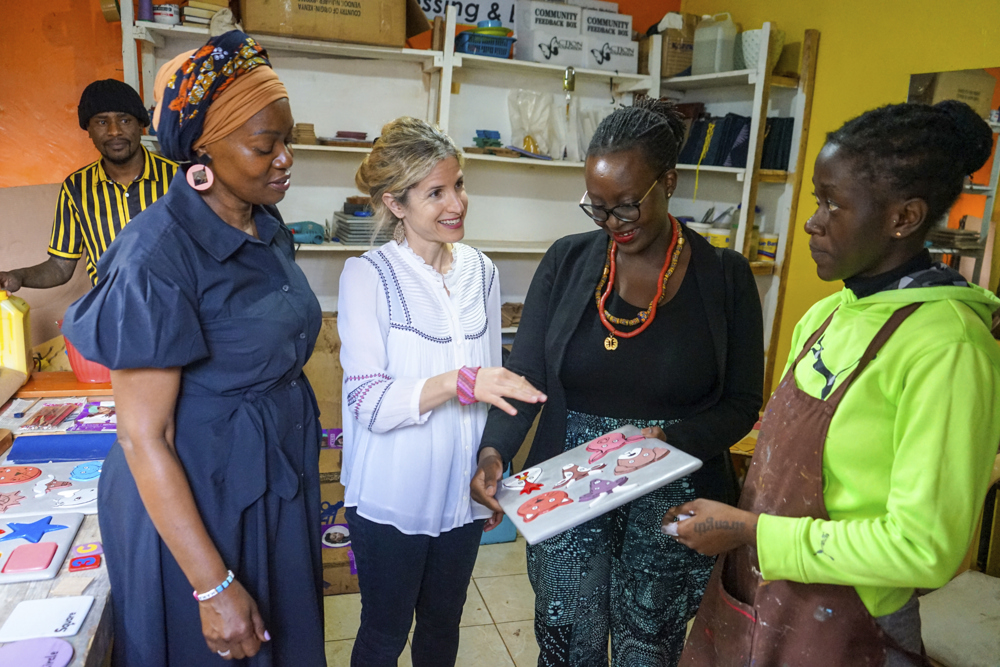
![Co Impact II 277[1][2]](/media/dxbh3wi2/co-impact-ii_-277-1-2.jpg?width=1000)


It's a good idea to use a strong password that you're not using elsewhere.
Remember password? Login here
Our content is free but you need to subscribe to unlock full access to our site.
Already subscribed? Login here